Solana Guides
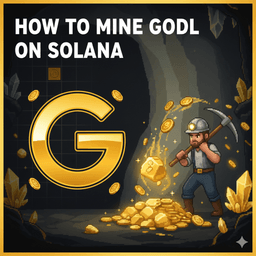


Why People Are Playing GODL
Let’s be honest about what attracts people to this and what the actual risks are with godl.supply.
The Appeal
1. Fair Launch = No Rug Pull Risk (Theoretically) Every token is minted on-chain through gameplay. No team wallet waiting to dump millions of tokens. You can verify the mint address and program ID yourself.
2. Early Stage Opportunity With less than 1% of max supply minted and only ~735 holders, you’re genuinely early. Compare that to ORE’s mature ecosystem, there’s more room for growth (and more risk).
3. Simple Gameplay No complex DeFi mechanics. You see a grid, you pick blocks, you wait 60 seconds. Even complete beginners can understand it in one round.
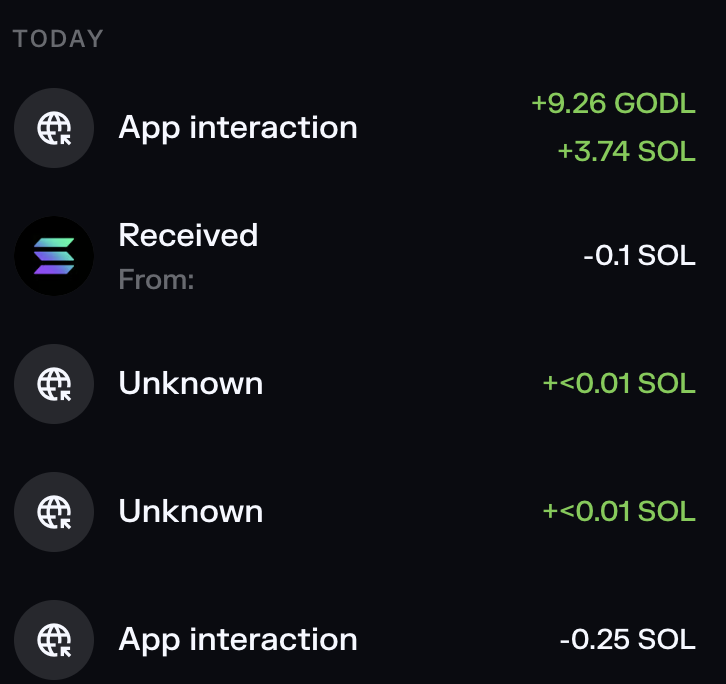
4. High-Variance Wins The single-block YOLO strategy creates moments like my 0.2 → 3.7 SOL win. When you hit, you hit big. That dopamine keeps people coming back.
5. Long-Term Incentives The refining system and staking rewards favor patient holders over quick flippers. If you believe in the token long-term, the mechanics work in your favor.
6. Less Crowded Than ORE ORE has massive competition. GODL’s smaller user base means less crowded blocks and better odds for solo wins (for now).
GODL vs. ORE: Side-by-Side Comparison
If you’ve played ORE, here’s what’s different and what’s the same.
| Feature | GODL | ORE |
|---|---|---|
| Mining Model | 5×5 grid, random block selection | 5×5 grid, random block selection |
| Round Duration | ~1 minute | ~1 minute |
| Max Supply | 21,000,000 | Different parameters |
| Circulating Supply | ~162,000 (~0.77%) | Much higher (mature) |
| Market Cap | ~$1.7M | Significantly larger |
| Holders | ~735 | Thousands+ |
| Motherlode Jackpot | Yes (1/625 chance) | Yes |
| Refining Mechanism | Yes (10% fee) | Yes |
| Team Allocation | Zero | Zero (fair launch) |
| VC Involvement | None | None (fair launch) |
| Smart Contract Audit | Not prominently displayed | Established/vetted |
| Competition Level | Lower (early stage) | Higher (mature) |
| Protocol Revenue | ~347 SOL/week | Higher (more activity) |
When GODL Might Be Better
- You want less competition for solo wins and big payouts
- You believe in early-stage upside (higher risk, higher potential reward)
- You prefer smaller, tighter communities
- You want to accumulate tokens before the crowd arrives
When ORE Might Be Better
- You want more established liquidity and easier exits
- You prefer proven smart contracts with longer track records
- You value larger community and more resources/tools
- You want more stable (relatively speaking) token dynamics
Bottom Line: GODL is the high-risk, high-reward bet. ORE is the more established play. Neither is “safe.”

How GODL Actually Works: The Deep Dive
Now that you’ve played a round, let’s break down the mechanics in detail.
The Round Sequence (What Happens Every Minute)
1. Round Opens → Timer Starts (~60 seconds) A fresh 5×5 grid appears. Players can deploy SOL onto any blocks during this window.
2. Players Deploy SOL You choose:
- How much SOL (e.g., 0.2 SOL)
- Which blocks (one block, multiple blocks, or all blocks)
Everyone’s bets are visible in real-time on the grid.
3. Timer Hits Zero → Random Block Selection GODL’s on-chain randomness program picks one winning block out of 25.
This is verifiably random on-chain—you can check the transaction.
4. SOL Redistribution
- All SOL from the 24 losing blocks is pooled
- The pooled SOL is distributed to winners on the winning block
- Your share = (Your SOL on winning block) ÷ (Total SOL on winning block)
Example:
- You put 0.2 SOL on block #7
- Block #7 wins
- Total SOL on block #7: 0.5 SOL (you + others)
- Your share: 0.2 ÷ 0.5 = 40%
- Total pot from losing blocks: 2 SOL
- You win: 2 × 40% = 0.8 SOL (plus your original 0.2 back)
5. GODL Token Minting Independently of SOL, the protocol mints +30 GODL per round as a base reward.
That +30 GODL is distributed to winners on the winning block (proportional to their stake).
6. Split vs. Solo Distribution There are two modes for GODL rewards:
- Split rounds – All winners share the 30 GODL proportionally
- Solo rounds – One address (weighted by stake) gets most/all of the GODL
This creates the potential for huge individual wins when you dominate a block during a solo round.
7. Motherlode Check Each round has a 1 in 625 chance of also triggering the motherlode jackpot (more below).
In Summary: Players deploy SOL → Random block wins → Losers’ SOL flows to winners → +30 GODL minted → Possible motherlode
The Motherlode: Progressive Jackpot Explained
The motherlode adds a slot-machine style jackpot element:
- Accumulation: +8 GODL added to the jackpot pool every single round
- Trigger probability: 1 in 625 chance per round (~0.16%)
- Payout: When it hits, the entire jackpot goes to winners on that round’s winning block (proportional to stake)
- Strategy: Watch the counter—when it’s huge, more people chase it (more competition but bigger payout)
It can roll for hundreds of rounds without hitting, or it could drop in the next minute.

Refining: Why You Don’t Get GODL Immediately
This is GODL’s clever mechanism to reward patient holders.
How it works:
When you win GODL through mining:
- It appears as “unrefined GODL” in your protocol account (not your wallet)
- To claim it as a liquid token, you must “refine” it
- Refining applies a 10% fee
- You receive 90% as refined GODL in your wallet
- The 10% fee is redistributed to other miners with unclaimed balances
Why this matters:
- Claim early? You lose 10% to the fee (which goes to patient miners)
- Wait longer? You accumulate extra unrefined GODL from other people’s refining fees
- Result: Refining rewards patience and reduces sell pressure
Strategic takeaway: If you’re long-term bullish, delay refining as long as possible to maximize your unrefined balance through others’ fees.
Buybacks & “Buried” GODL
There’s also a deflationary mechanism tied to protocol revenue:
- Protocol takes 10% of all SOL mining rewards as revenue
- That revenue is used to buy GODL on the open market
- Of the GODL purchased:
- 90% is “buried” (removed from circulation, effectively burned)
- 10% goes to stakers as yield
“Buried” means temporarily removed but can be reminted if total supply stays under 21M. In practice, this reduces circulating supply and supports price.

Tokenomics Breakdown
Let’s look at the numbers clearly.
Supply
- Max supply: 21,000,000 GODL (Bitcoin-style scarcity)
- Circulating supply: ~162,000 GODL (~0.77% of max)
- Minting rate: ~30 GODL per minute
- Team allocation: 0
- VC allocation: 0
Fee Structure (Where Your Money Goes)
SOL Fees:
- 10% of SOL rewards → Protocol revenue (buybacks)
- 1% of deployed SOL → Admin fee
- 1% of claimed SOL → Referral bonus
- Tiny amounts for account setup and autominer costs
GODL Fees:
- 10% of mined GODL → Refining fee (redistributed to patient miners)
- 10% of buyback GODL → Staking yield
- 90% of buyback GODL → Buried
The House Edge Reality
Looking at SOL alone, you’re playing a negative expected value game:
- 10% protocol revenue + 1% admin + fees = house edge
You only profit if:
- GODL token appreciation outweighs your SOL losses
- You hit big wins through variance
- Long-term refining and staking benefits compound
There’s no guarantee of profit. This is high-risk, speculative.
Strategy Guide: From YOLO to Grind
Here are the main approaches, from aggressive to conservative.
Strategy 1: Single-Block YOLO
Risk: Extreme | Reward: Massive
Deploy your entire amount on one block.
Why it works:
- If you hit, you capture most of the SOL on that block
- High chance of solo GODL bonus
- Potential for 10x+ returns in one round (like my 0.2 → 3.7 SOL)
Why it fails:
- You lose ~24/25 rounds on average
- Can burn your bankroll in minutes
- Emotionally brutal
Best for: Gamblers, thrill-seekers, people chasing viral wins.
Strategy 2: Multi-Block Spread
Risk: Moderate | Reward: Moderate
Divide your amount across 5-15 blocks.
Why it works:
- Higher chance of being on the winning block each round
- More frequent small wins
- Smoother experience
Why it’s limiting:
- You share pots with more miners
- Lower upside per round
- Less exciting
Best for: Players who want consistent action without huge swings.
Strategy 3: Autominer Grind
Risk: Moderate-Low | Reward: Steady
Set autominer to deploy small amounts across many blocks for 100+ rounds.
Why it works:
- Smooths variance over time
- Lets refining and buybacks work in your favor
- Less emotionally taxing
Why it’s slow:
- Still not guaranteed profitable
- Requires patience
- Smaller individual wins
Best for: Long-term players who want to accumulate GODL without constant attention.
Strategy 4: Motherlode Hunter
Risk: Variable | Reward: Jackpot-dependent
Watch the motherlode counter and increase participation when it’s large.
Why it works:
- Huge payout potential when jackpot is big
- Can combine with other strategies
Why it’s tricky:
- Can roll for hundreds of rounds without hitting
- Competition spikes when jackpot is visible
- Still random
Best for: Jackpot chasers who enjoy the lottery element.
[IMAGE SUGGESTION 9: Visual comparison table of all four strategies with risk/reward ratings]
Staking: Earning Passive Yield
Once you’ve refined GODL, you can stake it for yield.

How Staking Works
- Stake your GODL on the Stake page
- Earn yield from 10% of protocol buybacks
- Yield = your stake ÷ total staked × buyback distribution
Why Stake?
- Price support from buybacks reducing supply
- Direct yield in GODL tokens
- “Double-dip” benefit as the team calls it
No Fixed APR
Yield fluctuates based on mining activity. More SOL deployed = more revenue = more buybacks = more yield.
[IMAGE SUGGESTION 10: Screenshot of staking interface]
GODL Referral code & Airdrop
Referral System
Earn 1% of your referrals’ mining rewards (both SOL and GODL).
My referral link: https://godl.supply?invite=RAZZAER
Airdrop Campaign
Points-based system with tasks:
- Link X account: 10 pts
- Follow @GODLsupply: 100 pts
- Share with 2.5k+ views: 500 pts
- 5 referrals (≥1 SOL each): 2,500 pts
Points contribute to leaderboard and airdrop allocation.
Key On-Chain Info
For transparency:
- Token Mint:
GodL6KZ9uuUoQwELggtVzQkKmU1LfqmDokPibPeDKkhF - Program ID:
mineWsRs2Rmw2jPMkVbgAbDjV1E23yQ8TEodaX3iza4
Verify everything on Solscan or SolanaFM.
Disclaimer: This is not financial advice. GODL involves significant risk including potential loss of funds. Always do your own research and never invest more than you can afford to lose.
Questions? Drop a comment or find me on X. Stay safe out there.